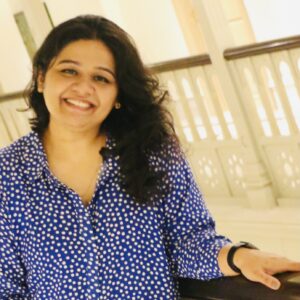
Natalini on Reimagining the Creative World with Human-First Technology


In conversation with the Co-Founder & CEO of the KOKO Foundation on championing human-first technology to protect creativity, culture, and human expression in an AI-driven world.
Tech for Tomorrow | A June Series on Sustainable Innovation
The rapid acceleration of artificial intelligence presents both an unprecedented technological leap and a profound environmental challenge. As the physical footprint of generative models expands, the future of innovation depends on harmonizing digital progress with planetary health. This June, Tech for Tomorrow hosts constructive conversations with global leaders rewriting the blueprint to build sustainable AI infrastructure, protect vulnerable ecosystems, and anchor technological advancement in responsible, real-world solutions. Crucially, true sustainability extends beyond energy grids into our human ecosystem. By expanding our lens to include cultural sustainability, we close our series by exploring how forward-thinking frameworks can safeguard human expression, protect independent artistic identity, and ensure technological breakthroughs ultimately enrich, rather than replace, the creative core that connects us all.
Protecting what makes us human
“The most powerful tool for change is the lived experience of beauty and human connection”, is the guiding principle for Natalini, the newly appointed Co-Founder and CEO of the KOKO Foundation.
She is tackling one of the most urgent questions of our time: how to champion Human-first technology to protect human creativity, expression, and connection amid unprecedented transformation.
Bringing more than a decade of international experience in navigating complex frameworks, alongside global institutions, including the UNHCR and COP28, Natalini pairs a diplomat’s precision with a builder’s foresight. She balances high-level cultural advocacy with hands-on systems architecture. To create international movements that bring about lasting impact in the way people see their role in societies.
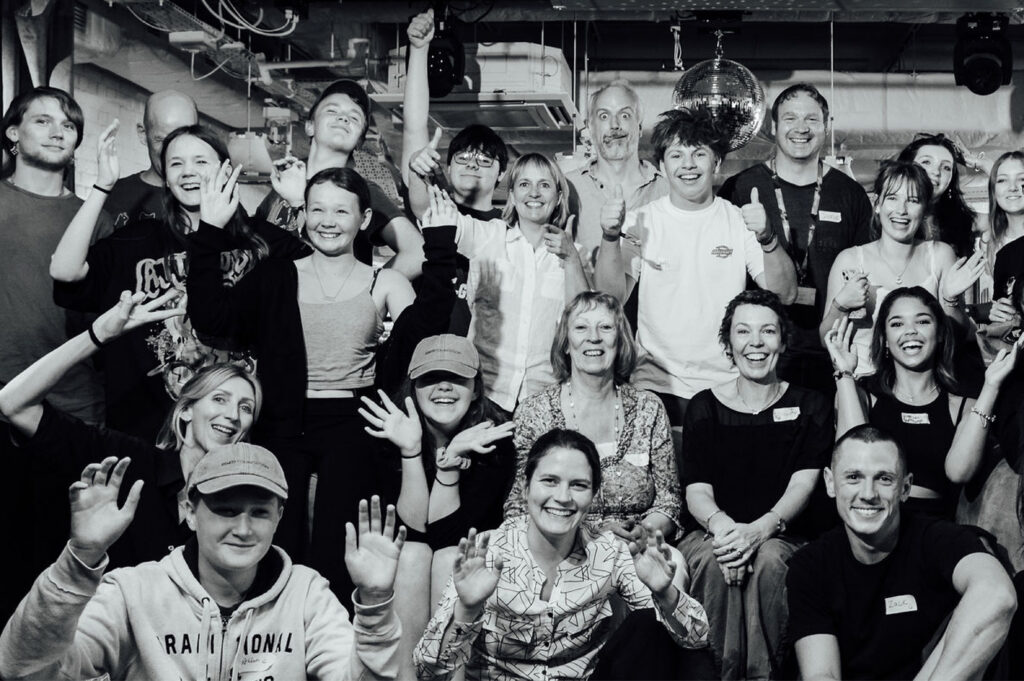
Guided by her leadership, the KOKO Foundation believes that every human being is creative and is on a mission to prove it. In an era where AI is forcing us to reimagine ourselves and the value we bring to the world, the opportunity is universal. A world where every human being reclaims their creative identity and connects to their true, authentic self. Building on KOKO’s 125-year legacy of pioneering culture and creativity, the KOKO Foundation begins with the people, places, and life stages. Where access to creativity has been thinnest, backed by an extraordinary cultural network of ambassadors and patrons, including Olivia Colman and Benedict Cumberbatch.
As part of Digital Digest’s Tech for Tomorrow interview series, this conversation with Natalini explores the future of Human-first technology, artistic identity, AI-native philanthropy, and why preserving what makes us human may become one of the defining features of the next technological era.
The transition to KOKO & the leadership vision
An exploration of Natalini’s journey from global diplomacy to anchoring a movement for creative identity.
You bring more than a decade of international experience navigating complex global frameworks alongside heads of state and cultural institutions. What was the core strategic or personal catalyst that inspired you to step into the role of Co-Founder and CEO of the KOKO Foundation at this specific moment in tech history?
Natalini: We find ourselves in a pivotal moment, a pregnant moment. We are going through perhaps one of the most groundbreaking technological disruptions of our entire human existence. And this brings both threats and opportunities. How we navigate this transition will define who we get to become. Not only as societies, economies, and communities, but as a species altogether.
We are very quickly entering an environment where efficiency, productivity, and rationality are no longer scarce. We have built our economic systems to mostly reward these qualities, but now they are available in absolute abundance to anyone who has access to AI as a tool.
This shift is exactly why we need a commitment to Human-first technology.
Consciously or unconsciously, a lot of us are asking ourselves: Who am I in this new world, and what is my value? If I am no longer valued for being rational and productive, then what do I contribute? I find this extremely interesting and, in a way, exciting. We get to reimagine ourselves as human beings, and who we become is up to us.
The KOKO Foundation showed up in my life at a very interesting moment. My work has always been a reflection of my personal journey. And in this case, KOKO showed up at a moment when I was grappling with my own creative identity and reconnecting to my natural creative spark. When Olly B reached out to me and offered to team up, my first thought was simple: every human being is creative. It’s human nature. This is not a revelation; artists and philosophers have said it for decades. What’s interesting is the moment in time. I believe that this moment of collective reckoning creates the necessary environment for all of us to reclaim our natural creative identity.
Building the mission of the foundation has been an incredibly exciting process of discovery. How can we leverage human creative identity to drive social impact and change? I believe that creativity has the potential to help people in need help themselves, and we are on a mission to prove this.
We start with Camden, where poverty runs at more than 40%, and we scale globally from there.
Your background spans international diplomacy, from the UNHCR Solidarity Circle to movement-building at COP28. How does operating at the highest levels of global diplomacy influence the practical approach you take to leading a creative, disruptive vanguard-like KOKO Foundation?
Natalini: The truth is that operating at the highest level of global diplomacy, policymaking, and civil society did not produce the results I was hoping for.
So, I’m interested in exploring a different strategy for impact. One where we leverage and study human creativity as a tool for impact, as a powerful tool for change. I think creativity is underused and overlooked in that sense.
And I am very interested in opening new pathways for the creative and philanthropic worlds to come closer together for a stronger, lasting impact.
In your appointment announcement, you highlighted a deep commitment to preserving KOKO’s historic imprint. Given the physical venue’s massive independent cultural legacy in Camden, how do you leverage this rich, physical history as an anchor to protect authentic human art in an increasingly virtual, automated world?
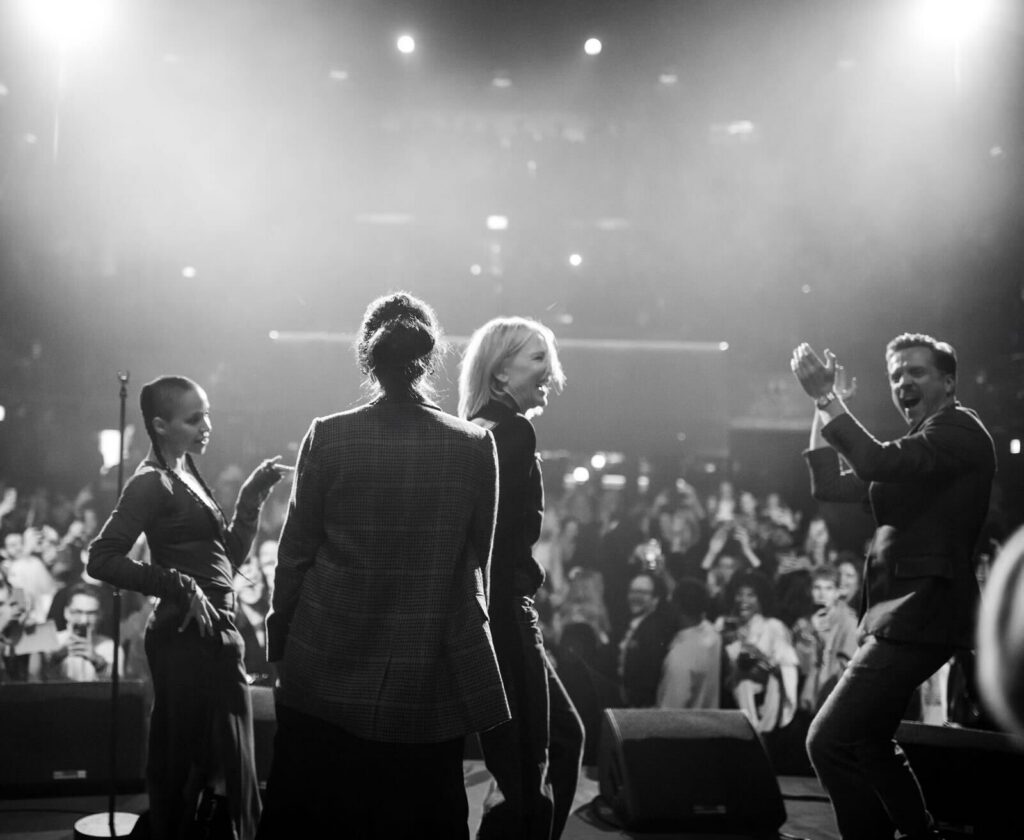
Natalini: KOKO is magical. You go to a show and connect with every human being in the building. Experiencing music live with others carries immense power.
In the past three months, I have been to every show that KOKO played. I saw Lykke Li, Armand Van Helden, Bob Sinclar, Flea, Thom Yorke, Angus and Julia Stone, Jon Batiste, in just three months, and consistently, I see the same thing. Time stops when people drop into the beat of their favorite artist. Time stops, problems disappear, everything softens. In a way, the increasingly virtual, automated world falls away. For a moment, but the moment is important.
I am always so curious to see how audiences behave. And over time, I noticed a pattern: an artist comes on, and everyone pulls out their phones. By the end of the show, you barely see any phones. People are in a different zone. We connect with one another, we are present, we come back to our bodies and our senses. It is magical.
So, to answer your question, this is how we protect authentic human art: by coming together to experience it in person. I think live entertainment is probably one of the sectors that will grow as a result of this mad robotization.
Humans yearn to come together for a moment of celebration and hope more than ever. You know, when the times are dire, which they are, music might be the answer.
The Camden blueprint & human-first technology
Proving the model where access is thinnest by bringing KOKO’s historic legacy directly to the community.
The KOKO Foundation has established a strong foundation in Camden through the KOKO Arts Academy and its various projects with young musicians. Why is it structurally vital for an organization with global creative ambitions to first prove its model on a localized, community level?
Natalini: I am deeply inspired by Helena Norberg-Hodge’s work on the power of local futures. Globalization is an incredible phenomenon, but it came at a price.
Returning to our local communities and anchoring ourselves there is a natural reaction to a world that may have become, maybe, a little too interconnected. Where we are from matters greatly. And KOKO is from Camden; it carries Camden in its DNA, in its spirit.
Part of starting this project has been to truly immerse myself in Camden and feel its pulse. Camden, to a great extent, shapes the foundation’s mission.
It’s the place where so many emerging artists come to experiment, to give it a shot, to express themselves creatively.
There is a wonderful documentary called CAMDEN. I recommend anyone who hasn’t seen it and is a fan of artists like Coldplay, Dua Lipa, Amy Winehouse, The Libertines, The Roots, and Oasis to watch it. You’ll find out that when these guys had no idea who they were, they were hanging out in Camden and performing at empty pubs. The freedom to be creative, this judgment-free environment where everyone can be whoever they want to be, this is the magic of Camden, and KOKO plays a big role in it.
-Natalini
At the same time, though, Camden has its own troubles. It is dealing with a more than 40% poverty rate. There are communities that live in extreme deprivation. The majority of those people are unlikely to ever visit KOKO or any of the borough’s cultural venues. So, we figured: we bring KOKO to them.
I can’t think of a better place in the world where creativity’s potential as a force for good can be unleashed and developed than Camden.
The work you are doing comes at a pivotal moment, as AI rewrites the terms of what it means to be human, the outsourcing of intelligence, thought, and now even expression and identity itself. For many, the unknown is something to fear. In championing a framework of human-first technology, what does it mean to build something in that climate?
Natalini: Let me start by saying: the climate is apocalyptic. The world has never felt more overwhelming, and public discourse has become so surreal that most of us can’t digest it. My feeling is that we have collectively checked out.
We move through crises that a decade ago would have defined an entire era. And now we scroll through them weekly. The Ukraine war, Gaza, the Epstein files, AI, and climate change. Each one alone is extraordinarily complex. Stacked together, they paralyze us. The nervous system can only take so much before it freezes, and I think we are there.
This is why I believe fear has reached its limit as a tool for change. It is powerful, but it is short-acting. Science shows that chronic exposure to threat doesn’t mobilize people; it produces learned helplessness. We stop responding, not because we don’t care, but because the alarm has been going off for so long that we’ve gotten accustomed to it and stopped hearing it.
So the question becomes: what’s the alternative? And I think it’s an inspiration, not as a soft option, as the main strategy. The neuroscience is clear. Where fear activates the stress response and narrows what we can imagine doing. Inspiration activates the brain’s reward and motivation systems, dopamine, oxytocin, and forward orientation. Research shows that positive emotional states don’t just feel better, they literally expand the range of actions a person can conceive of taking. And crucially, inspiration doesn’t just change behavior, it changes identity. Fear makes you run away from a future you don’t want; inspiration makes you run toward a future you want.
This is why the KOKO Foundation is such an exciting project. We get to inspire people to change with the power of beauty, connection, and art.
The creative vanguard & artistic ownership
Navigating the uncomfortable middle ground between tech hype and doom to safeguard independent artists.
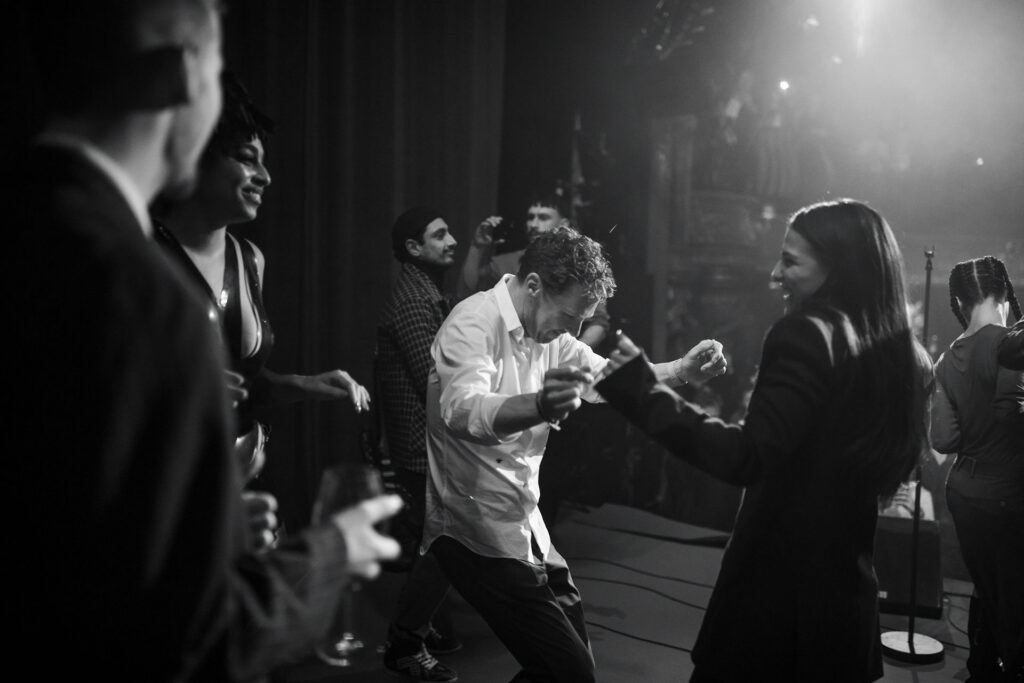
KOKO’s identity is deeply rooted in music, performance, and artistic expression. At a time when generative AI can replicate voices, styles, and creative outputs with increasing realism, how urgent is the conversation around protecting independent artistic identity and creative ownership? What kind of collaboration do you believe is needed between sectors to ensure we are developing true human-first technology that protects emerging talent?
Natalini: Both things are true at once, and I won’t pretend otherwise. The threat is real, careers, livelihoods, and the basic question of whether you can make a living as an artist. And the opportunity is real, too.
A kid in Camden with no studio and no contacts has tools today that a major label would have envied twenty years ago. Both. However, the mistake is picking one. Doom shuts the conversation down. Hype waves the danger away. The honest position is the uncomfortable one in the middle. Protecting people from harm while opening the door to the possibility.
What is needed in practice is the technology and creative worlds actually building together, with the hard questions settled up front. Who consented, who gets credited, and who gets paid? Those aren’t afterthoughts, they’re the design. And emerging artists need to be protected first, because the established ones can hire lawyers. The newcomer can’t.
If we only protect the people who can already afford protection, we’ve missed the point.
Technical architecture & human-first technology workflow
Establishing a fluid operational framework where technological speed supports, rather than replaces, human intuition.
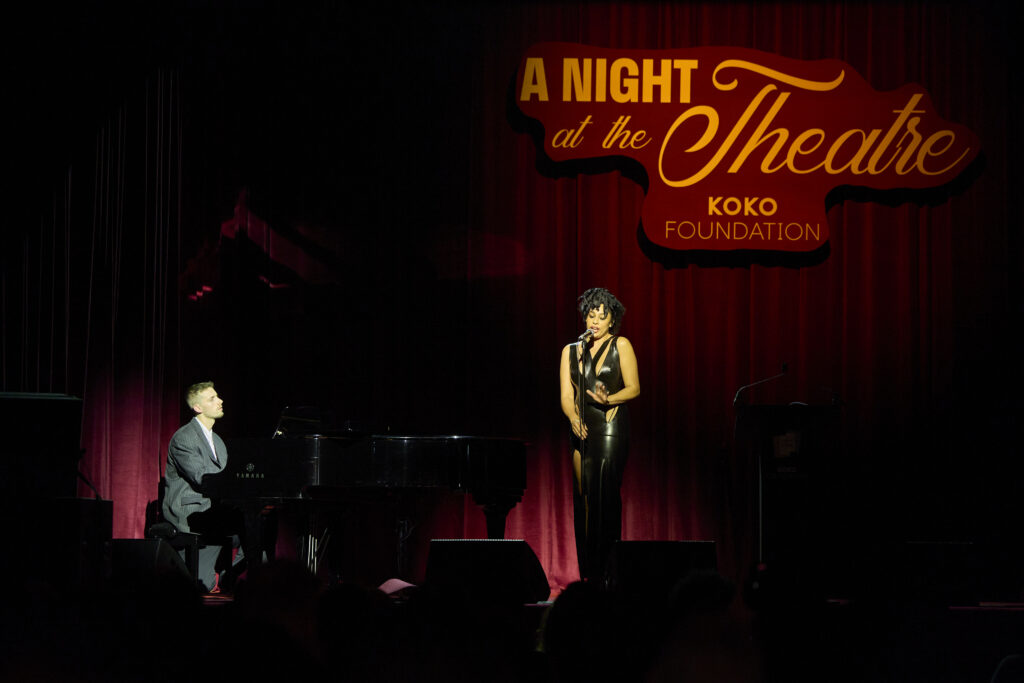
Many creative institutions view the integration of autonomous agents and LLMs with anxiety. From your perspective as a systems builder, where is the optimal engineering boundary? How should founders structure workflows so that AI removes operational friction while leaving the creative core strictly to human intuition?
Natalini: We are in the process of finding out. I have never built an organization with this incredibly powerful tool. It is interesting, very interesting. It makes me rethink and reimagine every single step.
From the way we structure processes to how we build teams, policies, and ethical guardrails. We are writing a new rulebook, and that’s exciting.
The tool is changing so rapidly that we are having to revise the internal AI policy, for example, monthly. Being able to take the KOKO Foundation team on this journey and explore this together is a very interesting experience. We talk a lot about it. About the ways in which it impacts our work, our creative output, and our productivity, and together, decide what the do’s and don’ts are.
I think founders should let go of structure at this moment in time. Structure is a moving target right now. And the quicker organizations are able to transform and adapt, the more they will win from this technology. Perhaps this is the most important piece of the puzzle. Constant motion and agility, which is something that I thoroughly enjoy. Of course, for a small organization like the KOKO Foundation, that is possible.
We are in a unique position to build with AI, which gives us the opportunity to grow with the tool and reinvent almost every wheel.
As we look toward the remainder of 2026 and beyond, what is your ultimate vision for the KOKO Foundation’s global expansion, and how can the international tech and policy communities practically implement a human-first technology approach when designing tools that interface with human connection?
Natalini: We believe that every human being is creative and is on a mission to prove it. This is the ultimate vision. Age-agnostic, we see ourselves playing a role in this shift in collective identity. And supporting people from all walks of life in the intricate process of reclaiming their creative identity. It is such a vulnerable process to come out and own your creativity, to call yourself creative. There is a peaceful revolution in that, and the vision is that we play a part in it.
We cannot do this alone, and we don’t need to. The possibility to collaborate with grassroots organizations, governments, tech giants, artists, and, of course, other venues is exciting. I think KOKO does a very good job of bringing people together. And the Foundation will build on this legacy. Bringing people together and inspiring them to create a world that is connected, empowered, and creative.
Our appeal when it comes to harnessing the power of tech tools is really, let’s develop the soft skills alongside the tools. Adopting a Human-first technology model is pushing us to return to the core human qualities. Creativity is one of them, but also curiosity, imagination, agency, discernment, empathy, and vulnerability.
If we can deploy the tools together with the skills, we move away from the risk of replacement and closer to the possibility of empowerment.
To close on a lighter note, what is one deeply human quality you hope technology never replaces?
Natalini: Human creativity.
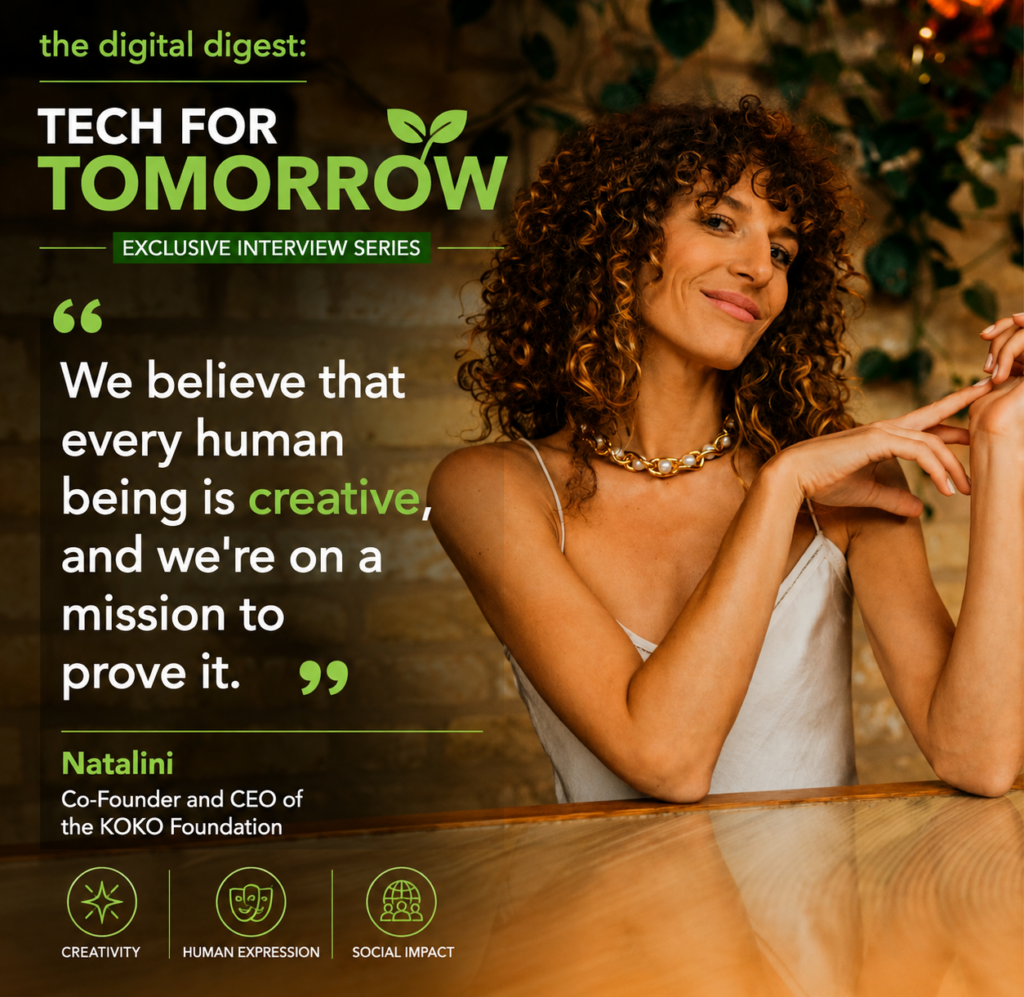
About the Speaker
Natalini Co-Founder and CEO of the KOKO Foundation leading an ambitious global mandate at the intersection of creative expansion, human identity, and systemic impact. With over a decade of experience navigating complex international frameworks alongside global institutions, including the UNHCR and COP28, she pairs a diplomat’s precision with a builder’s foresight and turns ideas into global movements. Beyond her leadership with the Foundation, Natalini is passionate about dance, writing, and spirituality. She also sits on the board of Women Safe House, a non-profit providing shelter and support for women suffering domestic violence and sexual abuse in Nigeria.