
Academic Strategist Ross Morrone on the TikTok Job Search Era


Expert insight on how TikTok’s influence, algorithms, and creator-driven advice are reshaping early-career expectations for Gen Z and millennials.
As social platforms transform everything from learning to shopping, they’re now reshaping one of the most defining journeys for young professionals: the TikTok job search era. A new study from Youngstown State University (YSU) reveals that 50% of young professionals now turn to TikTok for job and career advice, 66% of Gen Z say they rely on the platform for guidance, and 18% quietly use it as a “career cushion” to prepare for uncertainty.
No longer a private process, job-seeking has become a publicly visible performance, where peers, creators, and algorithms influence résumés, layoffs, confidence, and even mental health. To understand what these shifts mean for the future of work, digital skills, and the TikTok job search landscape, we sat down with Ross Morrone, Academic Marketing & Enrollment Strategy Officer at YSU, to unpack the findings and the deeper cultural forces driving this change.
The study shows that over 50% of young professionals now rely on TikTok for job guidance. What does this say about its rising influence on early-career behaviour?
Ross: The fact that one in two young professionals use TikTok for job guidance highlights a profound generational shift in how early-career learning happens. Traditional career development once centred on structured mentorship, college career centres, and corporate advice. Today, those spaces are being replaced by decentralised, peer-led learning ecosystems. TikTok’s appeal lies in its authenticity and immediacy, users can consume career hacks, résumé tips, and motivational stories in seconds. This reveals a move toward self-directed, on-demand professional education, where influence is distributed among relatable peers instead of gatekeeping experts.
With job-seeking becoming more visible online, how is this shift impacting confidence, competition, and expectations compared to traditional private job searches?
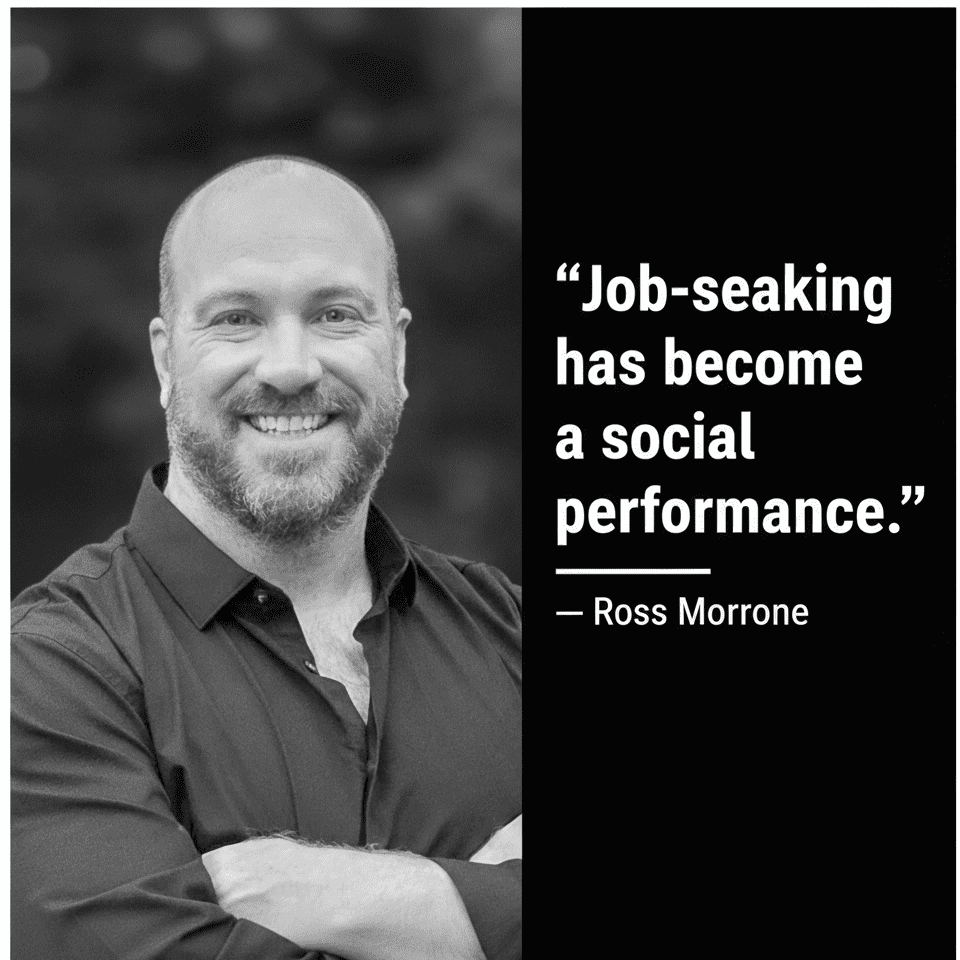
Ross: The public nature of online job-seeking has turned private ambition into a kind of social performance. One in three young professionals said they felt behind after seeing others’ career milestones on TikTok, proof that transparency cuts both ways. This visibility fuels comparison-driven motivation but also deepens anxiety and competition. Job seekers now measure progress not just by offers or interviews, but by public recognition. Unlike the quiet job searches of past decades, today’s job hunt demands both results and reputation, creating a dual pressure that redefines confidence and expectations.
What kinds of tech- and skill-focused advice are trending on TikTok, and how do they shape the roles young workers pursue?
Ross: The most viral advice focuses on tech fluency, digital branding, and AI literacy, with hashtags like #resumetips, #interviewtips, and #careertok leading the space. Many users learn to use tools like ChatGPT to write bullet points or optimise for ATS. This cultivates a skills-first mindset, where young professionals prioritise adaptable, transferable capabilities over rigid job titles. As a result, tech-adjacent roles — UX, digital marketing, data analytics, product design, are becoming aspirational benchmarks, even for those outside STEM backgrounds.
With algorithms amplifying certain career paths or skills, how might this shape perceptions of what is ‘in demand’?
Ross: TikTok’s algorithm rewards performance, not accuracy. This creates a feedback loop where perceived demand is dictated by visibility rather than real labour data. Trending videos on remote tech roles or “six-figure side hustles” can inflate the appeal of certain paths. This fosters algorithmic labour bias, a skewed perception of where opportunity truly lies. Social platforms like TikTok don’t merely reflect job markets, they subtly reshape them through amplified aspiration.
Given that 66% of Gen Z actively use TikTok for career decisions, what defines this digital-native approach to workforce planning?
Ross: Gen Z’s approach is social, experimental, and insight-driven rather than data-heavy. They rely on crowdsourced wisdom and real-time iteration, treating career decisions like content testing. Their choices are shaped by peer proof and participatory learning. This produces a more fluid, non-linear workforce identity built on agility, micro-skills, and community validation. For Gen Z, career planning is not about following a set path, it’s about building a personal algorithm for success.
Thirty percent of respondents update their résumés based on TikTok content. How aligned are these edits with AI hiring systems like ATS?
Ross: Design-forward résumé trends are popular on TikTok, but they often clash with ATS parsing. Some creators promote visual layouts or emojis that humans like but machines reject. Others teach keyword optimisation using AI tools like ChatGPT, which aligns well with ATS filters. The tension between creativity and compliance means TikTok sometimes prioritises style over substance. The best results come from blending visual storytelling with machine-readable clarity.
Nearly 1 in 5 quietly use TikTok as a ‘career cushion’. How does this reflect today’s volatile job market, especially in tech?
Ross: “Career cushioning” reflects post-pandemic instability and cyclical tech layoffs. On TikTok, young professionals quietly prepare by saving leads, building portfolios, or upskilling in private. A pattern that increasingly defines the TikTok job search experience in uncertain markets. It’s a practical, emotionally intelligent response to volatility. For tech workers especially, where job security fluctuates rapidly, TikTok becomes both a coping mechanism and an insurance policy.
With job-seeking now socially visible, what mental-health pressures emerge from the fear of judgment or comparison?
Ross: This is where the “highlight reel” effect becomes harmful. One in three young professionals feels behind, and 8% have taken breaks due to burnout. Seeing others’ curated success breeds toxic comparison, where personal progress feels insufficient. Thirty-four percent even “aestheticise” their job hunt. The emotional burden becomes two-fold: projecting optimism while navigating genuine uncertainty.
Sixty-four percent say TikTok advice has never backfired. How can young professionals evaluate what is credible versus what is simply viral?
Ross: Confidence is high, perhaps too high. TikTok’s virality rewards charisma over credentials. To identify credible advice, users should verify creator backgrounds, cross-reference with recruiters, and test small changes before committing. Digital discernment is crucial in an economy where the line between influencer and instructor is increasingly blurred.
Twelve percent say they landed a job after following TikTok advice. What tactics appear to translate into real hiring success?
Ross: Success often comes from blending active learning with practical execution. Those who benefit tend to use ChatGPT for optimisation, leverage niche hashtags to reach recruiters, or experiment with storytelling formats in video cover letters. These users treat TikTok as both classroom and networking platform, demonstrating digital fluency that employers notice.
Does TikTok portray tech and innovation careers differently from traditional job boards?
Ross: Absolutely. Traditional job boards present tech roles as structured and credential heavy. TikTok reframes them as accessible, creative, and financially empowering. “Day in the life” content humanises tech careers and makes them feel attainable. The platform democratises aspiration by making innovation roles feel within reach.
How might employers respond to this shift in talent behaviour?
Ross: Forward-looking employers are adapting. Many are building transparent, authentic employer-branding strategies on TikTok. Some recruiters scout talent via short-form video or host Q&As. Future hiring will likely blend traditional vetting with social engagement, valuing creativity and narrative as cultural-fit indicators.
What risks arise when influencer trends guide career decisions more than mentorship or research-based advice?
Ross: The risk is impulsive decision-making. Influencer tips can be inspiring but often lack nuance about pay, credentials, or industry differences. Without mentorship or data grounding, people may internalise inaccurate shortcuts. Popularity should not become a proxy for expertise, a blended approach ensures long-term alignment.
Which insights from the study challenge assumptions about social-powered career planning?
Ross: The biggest surprise is that TikTok isn’t superficial. It’s becoming a genuine learning channel. The fact that 64% reported no negative outcomes shows users are discerning. Young professionals aren’t passive — they’re turning entertainment spaces into informal education platforms.
Looking ahead, how might AI-powered social platforms redefine early-career mobility?
Ross: The future will be AI-curated, hyper-personalised, and continuous. Platforms will match users’ skills, interests, and behaviour patterns with tailored job opportunities or training. TikTok could evolve into a career navigator, blurring boundaries between learning, networking, and recruiting. Social platforms will increasingly shape, not just reflect, the labour market.