
MacBook Neo Steals Apple’s Hardware Week Spotlight


Apple had a busy week.
Between March 3 and March 5, the company quietly dropped six different hardware announcements, no big keynote, no dramatic stage reveal, just a steady stream of updates landing in Apple’s newsroom. First came a new iPhone. Then an iPad refresh. Soon after that, MacBook Air and MacBook Pro upgrades appeared. A new pro display followed. But the moment that made people pause was the arrival of something completely new: MacBook Neo.
In a week filled with faster chips and brighter displays, Apple’s most affordable MacBook ever released suddenly became the most interesting story.
Here’s how the six announcements fit together.
MacBook Neo: Apple opens the Mac ecosystem to millions
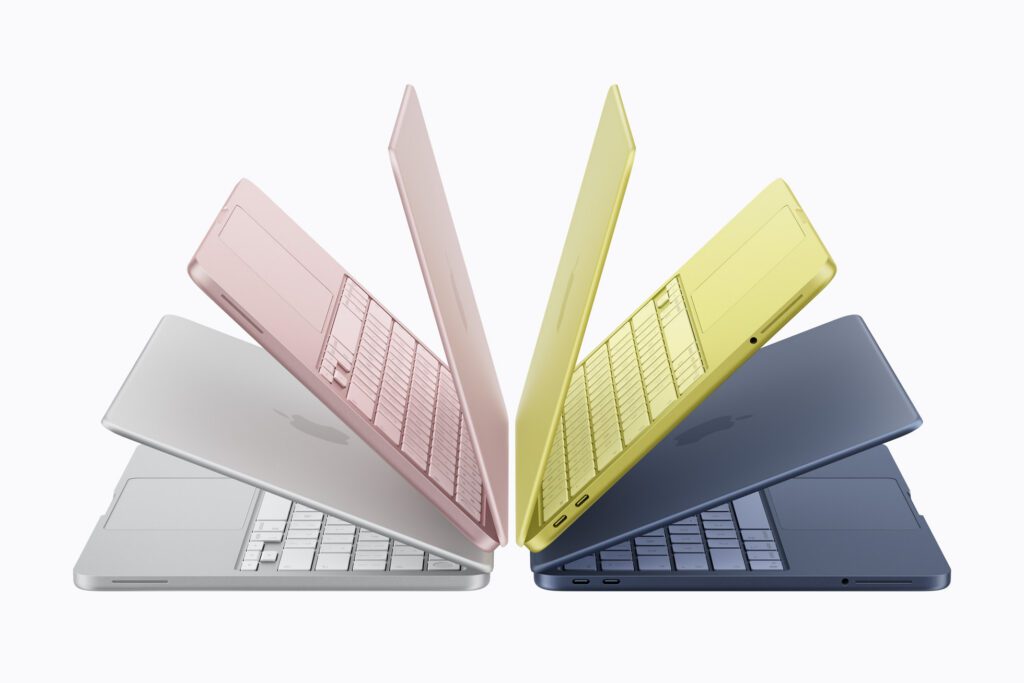
For a long time, getting into the Mac world meant buying a MacBook Air. It was the “affordable” Mac, although affordable was always a relative term. With MacBook Neo, Apple is trying something different.
Instead of squeezing the Air further down the price ladder, Apple created a new laptop built specifically for students, families, and people buying their first Mac. It still carries the familiar Apple design language. The aluminium body is there. So is the Retina display and the long battery life. But Neo adds something older MacBooks never really had: personality.
That comes through in the colours. Neo launches in blush, indigo, silver, and citrus, making it easily the most colourful MacBook Apple has released. Inside, Apple makes a surprising choice. The laptop runs on A18 Pro, the same chip architecture used in iPhone Pro models, showing how capable Apple’s mobile processors have become. Rather than chasing top-end performance, Neo focuses on something else entirely, portability, simplicity, and access to the Mac ecosystem.
- A18 Pro chip
- 13-inch Liquid Retina display
- Aluminium body
- Colours: blush, indigo, silver, citrus
- Up to 16-hour battery life
- 1080p FaceTime camera
- Spatial Audio speakers
- Magic Keyboard
- Multi-Touch trackpad
- Two USB-C ports
- Headphone jack
iPhone 17e: Apple upgrades its most accessible iPhone
Apple opened the week with the iPhone 17e, the newest entry in the iPhone 17 family. For a long time, Apple’s lower-priced iPhones were essentially scaled-down versions of the flagship models. With the 17e, the gap between the entry tier and the rest of the lineup starts to shrink.
Compared with the iPhone 16e, the new model brings a much stronger camera system and Apple’s latest mobile processor. The A19 chip improves performance while also supporting more AI-powered features across iOS. Apple is also bringing features that once belonged to premium models — MagSafe charging and satellite connectivity tools — down into the entry tier.
- A19 chip
- 6.1-inch Super Retina XDR display
- 48MP Fusion camera
- Optical-quality 2× zoom
- MagSafe charging
- Satellite messaging and SOS
- Ceramic Shield 2
- 256GB base storage
iPad Air (M4): Apple’s mid-range tablet gets serious power
The iPad Air refresh might look subtle at first, but the move to the M4 chip makes this one of the biggest upgrades in the lineup.
The previous iPad Air models already blurred the line between tablet and laptop. With the M4 processor, Apple pushes that idea further. Compared with the older M3 generation, the new model delivers stronger graphics performance and faster processing for creative work, gaming, and multitasking.
Apple is keeping the two-size approach introduced last year. Users can choose between the portable 11-inch model or the larger 13-inch version, which feels closer to a laptop-style workspace.
The tablet also supports newer connectivity technologies and deeper AI features with iPadOS 26.
- M4 chip
- 12GB unified memory
- 16-core Neural Engine
- 11-inch and 13-inch sizes
- Wi-Fi 7
- C1X cellular modem
- Apple Pencil Pro support
- Magic Keyboard support
MacBook Air (M5): Apple refines its most popular laptop
The MacBook Air didn’t receive a dramatic redesign this year, but Apple still gave its most popular laptop a meaningful update. The new model runs on the M5 chip, bringing stronger graphics performance and faster memory bandwidth compared with the M4 version.
Apple also doubled the starting storage, moving the base model from 256GB to 512GB, a change many users had been waiting for. Everything else about the Air remains familiar. The laptop still carries its fanless design, lightweight aluminium body, and long battery life.
- M5 chip
- 10-core CPU
- Next-generation GPU
- 512GB base storage
- Liquid Retina display
- Wi-Fi 7
- Bluetooth 6
- Up to 18-hour battery life
MacBook Pro (M5 Pro and M5 Max): Built for demanding workloads
While Neo targets new Mac users, Apple’s MacBook Pro refresh sits at the opposite end of the spectrum. The updated machines are powered by M5 Pro and M5 Max, Apple’s newest professional processors. Compared with the previous generation, the chips deliver stronger CPU performance, improved graphics, and significantly higher AI processing capability.
Apple also increased memory bandwidth and improved SSD speeds, making the laptops better suited for heavy workloads such as video production, software development, and AI model training. The familiar 14-inch and 16-inch MacBook Pro designs remain unchanged, continuing to feature Apple’s Liquid Retina XDR display and long battery life.
- M5 Pro and M5 Max chips
- Fusion Architecture
- Up to 18-core CPU
- Up to 40-core GPU
- Up to 128GB unified memory
- Liquid Retina XDR display
- Thunderbolt 5
- Up to 24-hour battery life
Studio Display XDR: Apple upgrades its pro display lineup
Apple also expanded its display range with Studio Display XDR, a new monitor designed for creative professionals. Compared with the original Studio Display, the new version introduces mini-LED backlighting, dramatically improving contrast and HDR performance.
The display can reach 2000 nits of peak brightness, while a 120Hz refresh rate makes motion smoother for editing video and animation work. It’s clearly aimed at filmmakers, designers, and visual effects professionals who rely on accurate colour and high brightness.
- 27-inch 5K display
- Mini-LED backlighting
- 2000-nit peak brightness
- 120Hz refresh rate
- Adaptive Sync
- Thunderbolt 5
- Center Stage camera
- Spatial Audio speakers
Distilled
By the time Apple finished its three-day product rollout, the company had refreshed nearly every major part of its hardware lineup. There were faster chips, better displays, stronger cameras, and more powerful laptops. But the product that generated the most curiosity wasn’t the most powerful one.
It was MacBook Neo.
In a lineup filled with performance upgrades, Neo represents something slightly different — a shift toward making the Mac ecosystem easier to enter. For students, families, and first-time buyers, it could be the laptop that introduces them to the Mac. That could make MacBook Neo the most consequential product Apple released that week.