
What is Shor’s Algorithm: Why it Matters for Encryption’s Future?


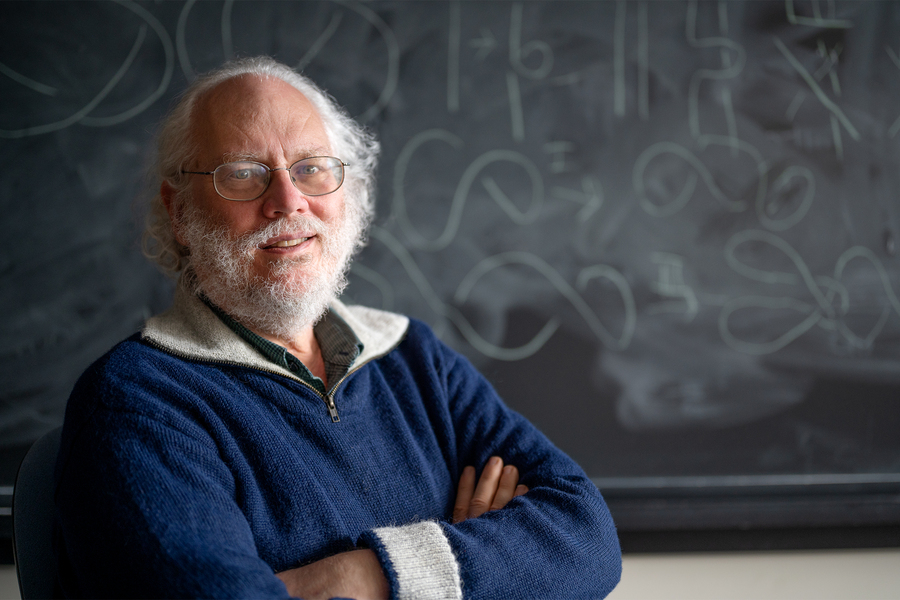
In the world of digital security, the phrase Shor’s algorithm already sends ripples through the foundations of encryption. This quantum-computing method, developed by Peter Shor in 1994, offers a way to tear apart the very mathematics that underpin much of modern public-key encryption.
It could be the biggest shake-up in cybersecurity since the birth of public-key encryption.
Let’s explore Shor’s algorithm, how it works, why it poses a threat to current encryption, how the world is responding through post-quantum cryptography, and what this means for the future of encrypted communication.
Understanding Shor’s algorithm: The basics
Shor’s algorithm is a clever way for a quantum computer to solve one of the most challenging mathematical problems, breaking big numbers into their prime factors (prime numbers that multiply to give a larger one).
That might sound simple, but this problem is the backbone of many encryption systems. Computers today find it easy to multiply two large prime numbers together, but almost impossible to separate them again. That’s what keeps our digital secrets safe.
Encryption methods like RSA (Rivest–Shamir–Adleman) encryption, one of the most widely used systems for securing online data, work because factoring large numbers takes classical computers billions of years to complete.
For example, multiplying 17 × 23 is easy. But if you only know the result (391), figuring out those primes again is nearly impossible for ordinary computers when the numbers reach hundreds of digits.
How Shor’s algorithm changes the game
Peter Shor discovered a way for a quantum computer to find those factors much faster. His method transforms the problem into a period-finding task, which quantum machines excel at solving.
Thanks to quantum superposition, the algorithm can test multiple possibilities simultaneously and identify patterns instantly. That provides quantum computers with a significant speed boost. Instead of taking billions of years, they could (in theory) solve in minutes what today’s computers cannot touch.
Here’s what actually happens, minus the heavy maths:
- You pick a random number that’s smaller than the one you want to break.
- The computer checks if that number shares a simple link (called a greatest common divisor) with your big number. If yes, you’ve already found a factor.
- If not, the quantum part kicks in. It looks for a repeating pattern, called a period, hidden inside complex equations.
- Once that period is found, you can calculate the original factors.
- If the result doesn’t work out, you just try again with another number.
That’s it. Shor’s algorithm continues to test and identify patterns until it discovers the number’s hidden factors.
Shor’s algorithm can do in polynomial time what classical computers do in super-polynomial time, meaning it scales far better as numbers get bigger. It turns what once seemed impossible into a realistic challenge, and that changes everything about how we secure data.
Why Shor’s algorithm matters for encryption
Most of today’s encryption systems, RSA, Diffie-Hellman, and elliptic-curve cryptography, are built on one core assumption: factoring huge numbers or solving discrete logarithms is impossible in any reasonable time.
Shor’s algorithm breaks that assumption.
This single discovery challenges decades of trust in the mathematics that protect global communications.
If a large, stable quantum computer is ever built, it could use this algorithm to crack the keys protecting our emails, online payments, and secure communications. In theory, all classical encryption could be broken.
How encryption systems are affected
- RSA encryption relies on how difficult it is to factor a large number back into its prime factors. If Shor’s algorithm makes that easy, RSA is finished.
- Elliptic-curve encryption relies on solving a different “hard” maths problem, but Shor’s method works there too, by adapting to discrete logarithms.
While quantum computers that can run Shor’s algorithm at scale don’t yet exist, many experts consider the timeline uncertain. The risk lies in the “store now, decrypt later” threat: encrypted data captured today could be stored and decrypted later once a quantum-capable machine exists.
That’s why security leaders are urged to act now.
The rise of post-quantum cryptography
Because of the threat posed by Shor’s algorithm, the cryptography world has responded by developing post-quantum cryptography (PQC), algorithms designed to resist quantum attacks.
Post-quantum cryptography refers to cryptographic algorithms believed to be secure even in a world where powerful quantum computers exist. These algorithms rely on problems other than integer factorization or discrete logarithms, such as lattice-based, code-based, or multivariate polynomial problems.
Leading approaches and global adoption
Lattice-based schemes, such as CRYSTALS-Kyber, and code-based systems, like Classic McEliece, are among the leading candidates for post-quantum encryption. These approaches aim to create security models that even quantum computers cannot break.
PQC is the foundation for a quantum-safe future. Without it, once a powerful quantum computer becomes available, today’s encrypted channels could become vulnerable. Shor’s algorithm remains one of the strongest motivators behind this global shift.
To stay ahead, organisations and governments are already moving. The National Institute of Standards and Technology (NIST) is formalising PQC standards, while enterprises are auditing existing cryptographic systems, identifying dependencies, and preparing for a transition to quantum-resistant algorithms.
Can we now run Shor’s algorithm?
With global efforts underway to develop post-quantum defences, the obvious question is whether Shor’s algorithm can already be tested in practice.
Although Shor’s algorithm is theoretically robust, executing it at a real-world scale is extremely hard. You need a quantum computer with many qubits (and low error rates), plus heavy error-correction overheads. According to research, breaking large encryption keys in the wild may require millions of qubits.
Researchers have implemented Shor’s algorithm on small numbers — for example, factoring 15 (3 × 5) using seven qubits. These small demonstrations prove the theory but are far from breaking genuine encryption keys that use hundreds or thousands of bits.
While we won’t dive into code here, you can explore quantum computing platforms, such as IBM Quantum, that let you experiment with small-scale versions of Shor’s algorithm. Many tutorials show how to set up the environment, select a number N to factor, prepare quantum registers, execute the period-finding subroutine, and measure results.
These platforms are ideal for education, not for breaking real-world cryptography.
Why individuals and businesses should pay attention
This isn’t just a problem for scientists — it affects every organisation that relies on encrypted data.
Information that appears secure today may not remain safe once quantum computers can run Shor’s algorithm on existing key sizes. The risk is even higher for institutions with long-term confidentiality needs, such as governments, banks, or healthcare providers, where sensitive data could be stored now and decrypted later.
To stay protected, organisations must embrace cryptographic agility — the ability to switch encryption algorithms quickly and efficiently as technology evolves.
Concrete steps to prepare
Here’s a simple five-step roadmap to help your organisation prepare for the quantum era and stay ahead of emerging encryption risks.
Step 1: Inventory your crypto usage
Identify which cryptographic algorithms your systems, software, and products currently rely on. This audit helps you identify potential vulnerabilities.
Step 2: Plan for migration
Evaluate quantum-resistant algorithms and create a roadmap for transitioning your systems to post-quantum cryptography when standards are finalised.
Step 3: Stay aware of standards
Follow updates from the National Institute of Standards and Technology (NIST) and other global bodies leading post-quantum cryptography initiatives.
Step 4: Test on a small scale
Use quantum simulators or educational quantum platforms to experiment with concepts like Shor’s algorithm. This helps teams understand its impact and prepare practically.
Step 5: Design for agility
Build systems that can easily switch cryptographic algorithms without requiring major redesigns or service disruptions. Flexibility is key to staying secure as technology continues to evolve.
Distilled
Shor’s algorithm is more than a mathematical breakthrough — it’s a warning bell for cybersecurity. As quantum computing advances, today’s encryption will face growing pressure.
Algorithms once considered unbreakable could soon be vulnerable. Organisations that act early, by adopting post-quantum cryptography and designing for agility, will be better prepared. The age of relying on “hard maths problems” for safety is ending. It’s time to plan for a quantum-ready world.